More Than Just a City:
Breathing and Being in Mumbai’s Everyday Magic
A Personal Journey Through India’s Fastest City
There are cities you visit, and there are cities you feel. Mumbai is most certainly in the second category.
Easily referred to as India’s financial capital, Mumbai is a city that lives off its hustle. It’s a city in constant motion, but one that somehow finds room for tales, breaks, and human beings. I recently found myself amidst this energetic turbulence and learned that behind each honk, wind, and alley, Mumbai beats with a pulse you can listen to — if you allow yourself.
First Steps in a Living, Breathing Metropolis
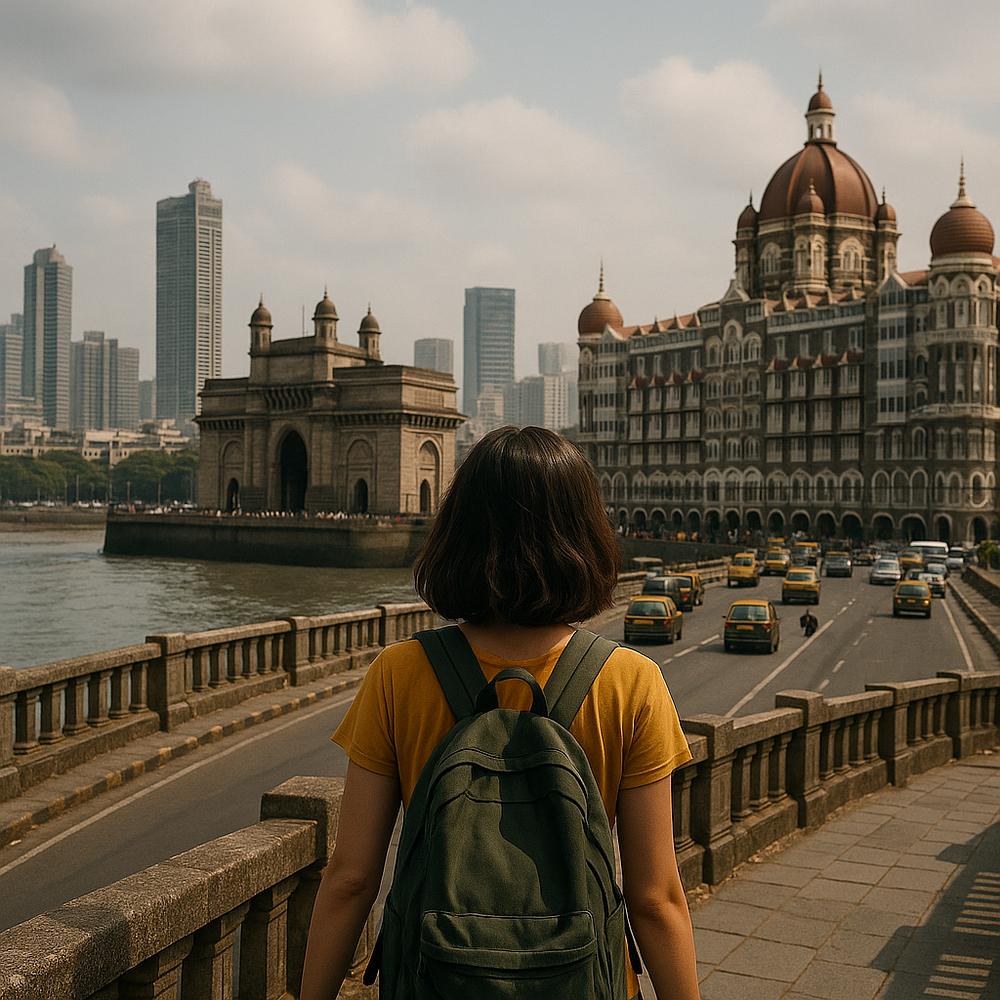
I arrived in Mumbai without a strict itinerary, just a desire to experience and learn. My initial impression was easy: contrast. There was the din of rickshaws and the haze of moving people; there was the soothing hum of the Arabian Sea and the shelter beneath banyan trees that seemed to contain decades of secrets.
My home base for this trip was a humble homestay I discovered through an app called cheQin.ai. Rather than scrolling listlessly through endless listings, I put in what I wanted — affordable, clean, near the railway station — and the suitable options found me. I checked into a snug little place hidden away in Bandra, near the center of the city’s beat.
Gateway of India and the Echoes of Empire
One of my earliest destinations was the Gateway of India. Whatever number of times it makes its way into films or tourist pictures, nothing really prepares you for the sheer presence of it. It was like a page of history set on the beach, observing while boats rocked gently in the distance.
A short stroll from there brought me into the heritage area of Colaba. Architecture there spoke in hushed tones of a bygone age. Bookstores, restaurants, art galleries — all held together with street talk and old Bollywood music blaring from auto-rickshaws.
The Chaos and Calm of Marine Drive
In the evening, I took a stroll along the curve of Marine Drive. They named it the Queen’s Necklace for a reason — from afar, the streetlights did resemble a string of pearls. But it’s not just an eye candy. It’s where the city takes a breather for a while. People sat alone, in twos, in groups. Some spoke, others merely observed the waves. I sat down somewhere quiet, breathed deeply, and for the first time, didn’t feel like I was in a hurry.
Chor Bazaar: Flea Market Meets Memory Lane
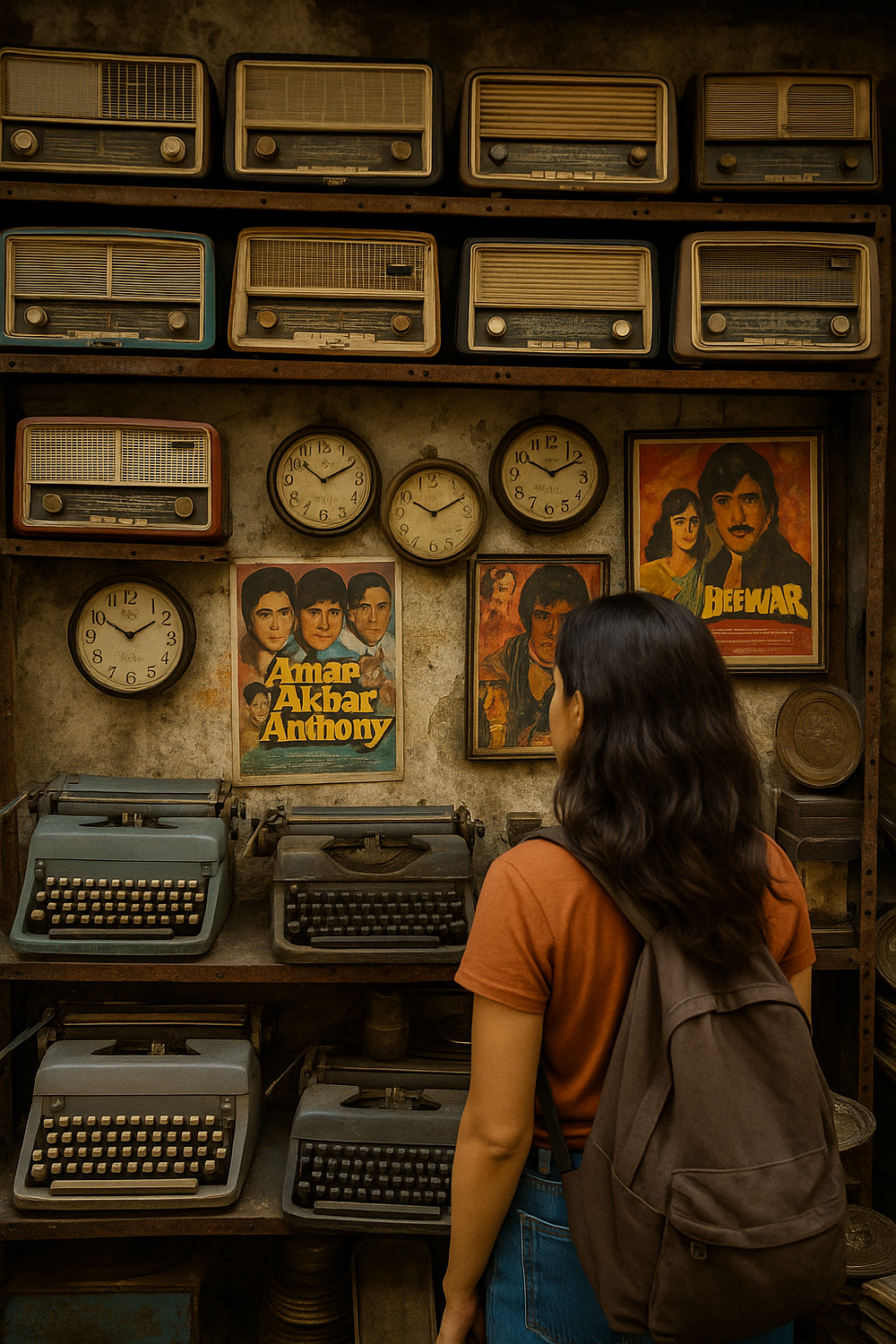
The following day, I visited Chor Bazaar — a neighborhood that seemed like hours had become knotted and just would not untangle. Radios from decades past, old typewriters with dust covering them, frayed Bollywood posters, and clocks that would likely not have ticked in decades. It was more of a museum that happened to sell its artifacts.
I did not go there to buy. I went to look. And in those narrow alleys lined with antiques and whispers, I discovered pieces of tales I’ll never get to know but won’t forget either.
Bandra: Art, Cafes, and Unexpected Corners
In Bandra, I let myself get lost easily. This side of the city does not shout for attention; it smiles at you from behind a wall where poetry is painted, from the laughter that spills out of a roadside chai shop.
I chanced upon a street covered in murals. Not simply paint on walls — Mumbai seemed to be speaking in color, in protest, in joy. Here, contemporary cafes exist side by side with small churches, and vendors selling coconuts have corners for vintage clothing stores. It’s a place where you can stroll without a map and still discover your direction.
Small Moments That Stay
What made Mumbai stand out weren’t necessarily the large monuments. It was the restaurant-recommending autorickshaw driver. The street vendor who made me taste vada pav “his way.” The grandmother who sold incense outside a temple and reminisced about the monsoons of 1972 as if they were yesterday.
A Stay That Didn’t Distract
My homestay turned out to be a peaceful, necessary part of my experience. With so much of the city in motion, it was nice to come home each evening to a place that didn’t overwhelm. I liked the small things — a clean bed, a functioning fan, the scent of someone cooking in the vicinity. It didn’t impress. It merely let me rest, and that was enough.
Final Reflections
Mumbai doesn’t surrender easily. It waits. It observes the way you move about in it. And if you stop fighting the pace and take a walk with it instead, it provides more than a trip — it provides you with a memory that’s breathing.
For any visitor to Mumbai: don’t arrive with an agenda. Arrive with questions. Don’t attempt to trap it all. Let it trap you.
Because Mumbai, with all its craziness and wonder, is not something to be ticked off. It’s something to be experienced.